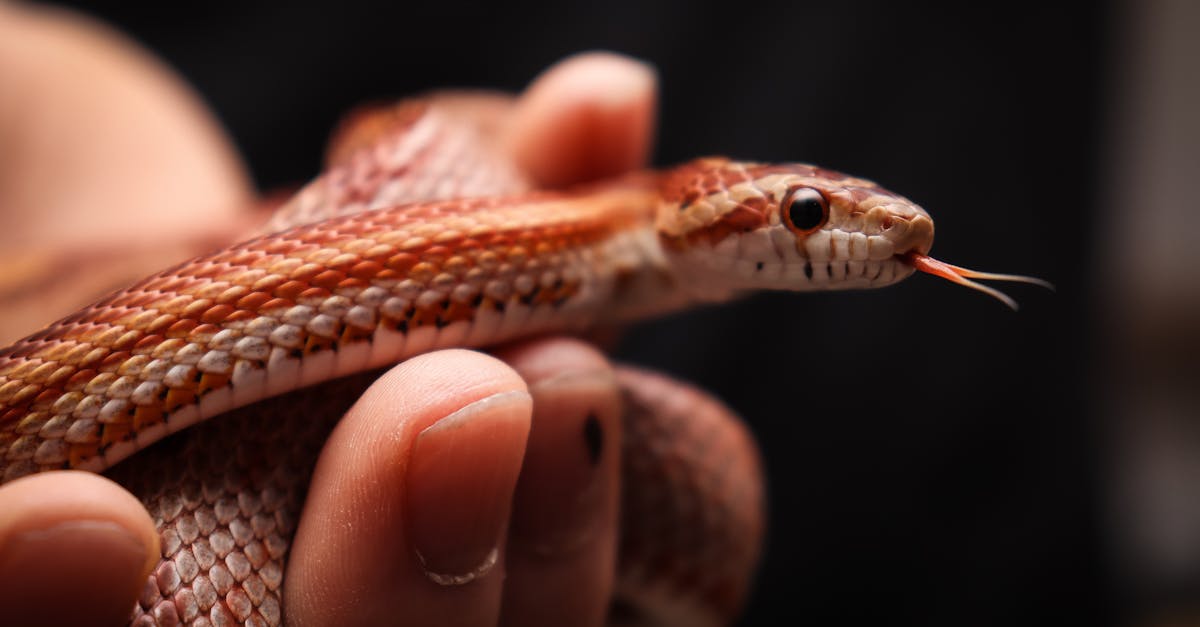
Dreaming of snakes — what does it mean?
Dreaming of snakes can be unsettling, but the snake is one of the most powerful symbols of transformation. Explore the most common interpretations.
Foto: Ruben Christen / Pexels
- Transformation and personal growth may be on the way
- You may be carrying a hidden fear or threat
- Strong intuitive or creative energy is stirring
Contents
What does it mean to dream about snakes?
Have you dreamed of a snake and wondered what it might mean? You’re far from alone — the snake is one of the most frequently occurring symbols in the dream world, appearing across cultures and throughout history. The interpretations can be surprisingly varied and depend heavily on the context of the dream. There’s rarely a single, tidy answer, but a few patterns tend to stand out.
When the snake sheds its skin
Transformation and new beginnings
A snake shedding its skin is perhaps the most iconic image of transformation in nature. When snakes appear in dreams, it’s often during periods when you yourself are in motion — changing jobs, ending a relationship, or moving through a personal growth process.
You may have dreamed of a snake at a time when something old is falling away and something new is arriving. The dream might reflect your unconscious recognition that an upheaval is necessary, or already underway.
An unconscious fear or threat
For many people, snakes trigger immediate unease, and the dream can mirror a real anxiety in waking life — a situation you haven’t confronted, a person you don’t quite trust, or a problem that has been simmering unresolved for a while.
Pay attention to whether the snake in the dream was aggressive or passive. A snake lying still often points to something different than one that attacks.
Knowledge, wisdom, and hidden potential
In many cultures, the snake is a symbol of deep knowledge — think of medicine’s caduceus symbol, or the snake’s role in the Garden of Eden as a bearer of insight. Dreams where the snake appears peacefully, or where you aren’t afraid, often point toward something else entirely: creative power, intuitive insight, or untapped potential that’s beginning to awaken.
What the snake’s behaviour tells you
The context of the dream matters a great deal. Here are a few variations that often lead to different readings:
If the snake bites you: This can point to a situation in life where you feel betrayed or hurt by something you weren’t prepared for.
If the snake is friendly or not dangerous: Often read as a positive sign — a transformation you’ve come to accept, or a creative force you’re in the process of embracing.
If there are many snakes: May reflect feeling overwhelmed, or a situation with many unresolved threads competing for your attention.
If the snake is white: White animals in dreams are often associated with purity, spiritual insight, or a sense of calm after a difficult period.
If the snake is black: Black is often linked to the unconscious, hidden parts of yourself, or something you haven’t yet faced.
The snake — transformation, danger, and desire
Few creatures have accompanied humanity through as many myths and symbols as the snake. It sheds its skin several times over its life, and across cultures this has made it an image of renewal and cyclical change. In Egyptian and Greek thought we find the Ouroboros — the snake biting its own tail — a symbol of eternity and the endless cycle of existence. Dreaming of a snake can therefore be read as a sign that something in your life is being reborn in a new form.
The snake is also closely tied to healing. The Rod of Asclepius, a single snake coiled around a staff, comes from Greek mythology and represents the god of medicine — the symbol is still used in medicine today. This captures something of the snake’s core ambiguity: it can be both poison and remedy, danger and cure, often at the same time.
Sigmund Freud pointed to the snake as one of the most discussed phallic symbols in dreams, linking it to repressed desire or sexuality. In Hindu and yogic tradition we find a different reading: kundalini, the “coiled snake” of energy said to rest at the base of the spine, associated with spiritual awakening. Which of these readings fits best often depends on how the snake behaved in your dream — and what feeling it stirred in you.
Sources and further reading
- Sigmund Freud, The Interpretation of Dreams (1900) — the snake in the psychoanalytic reading, and why it became the most contested image of all.
- Carl Gustav Jung, Man and His Symbols (1964) — the snake as an image of transformation and of what moves below the threshold of awareness.
- G. William Domhoff, The Scientific Study of Dreams (2003) — the continuity hypothesis, and why the snake’s behaviour in the dream tells you most.
The Dream Guide recommends Dreams rarely give a simple answer — they speak to you through images and feelings. Ask yourself:
Previous reflections
No saved reflections yet — start above.