Children and dreams — what kids dream about, and how to help them
Children dream differently from adults and have their own needs around dreaming. Here is what research knows about children's dream life, and how to help.
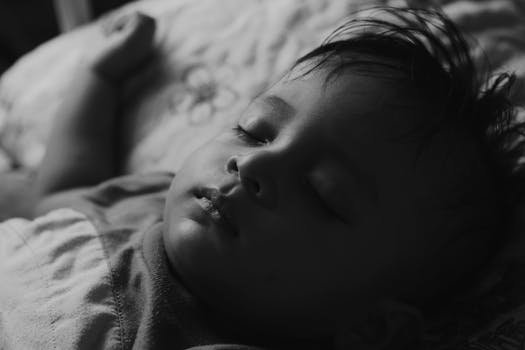
Your child sits up in bed in the middle of the night, frightened of something they can’t put into words. Or they tell you about a dream where the two of you were on an adventure together, vivid and detailed. Children dream — and they dream intensely. But a child’s dream life differs from an adult’s in ways that matter.
When do children start dreaming?
Research on newborn sleep shows that infants spend a disproportionate share of their sleep time in REM sleep — the stage where dreaming happens. Newborns can spend up to half their sleep time in REM, compared with roughly a fifth to a quarter for adults. What they actually dream about during this period, we don’t know — but the brain is clearly intensely active.
The earliest dreams we can examine through children’s own accounts, from around age two or three, are remarkably simple. They tend to involve animals and concrete situations, with little of the narrative complexity found in adult dreams. A young child is rarely an active participant in their own earliest dreams — they’re more like an observer of images.
Nightmares are common — and peak between ages three and six
Nightmares are at their most frequent between ages three and six. This is a normal part of development — the brain is processing a rapidly growing universe of experience, and that can produce frightening dream material. Typical childhood nightmare themes include wild animals in pursuit, monsters, losing a parent, or getting hurt.
Freud’s view — that dreams represent repressed wishes — fits children’s nightmares poorly. A more useful way to think about it is that the brain uses REM sleep to process emotional material, and that children, during the dreaming years, are moving through a stage full of new, intense, and sometimes frightening experiences that need processing.
It’s worth distinguishing between a nightmare — where the child remembers the dream and can be reached after waking — and a night terror, where the child is unreachable and remembers nothing. See the guide on night terrors for more on that distinction.
What children’s dreams reveal
Research on children’s dream patterns shows some clear tendencies.
Younger children (ages three to five) dream simply and concretely. Animals appear far more often in children’s dreams than in adults’. The people in the dream are usually familiar — parents, siblings, friends. Unpleasant dreams are more frequent than in adults, and the child is rarely an active participant.
Older children (ages six to twelve) start dreaming more like adults. They become active participants, the dreams gain more narrative structure, and classic anxiety dreams begin to appear — being tested, being chased.
Girls and boys dream somewhat differently through childhood — girls tend to report more relational dreams, boys more activity- and conflict-oriented ones. These differences reflect cultural patterns and aren’t necessarily biologically fixed.
How to talk with a child about a dream
A child’s dream world is a unique window into what they’re carrying emotionally. A few principles for good conversations about dreams with children:
Meet the dream with curiosity, not dismissal. “It was just a dream” brushes off an experience that felt real and important to the child. Better: “Tell me more about what happened in your dream.”
Help the child name the feeling. “Were you scared in the dream? Which part was the scariest?” Putting words to a dream’s emotional content helps the child process it.
Don’t interpret — reflect. Children don’t need an adult’s interpretation of their dreams. They need room to tell the story and explore it themselves.
Create a reassuring ending. For younger children, a “monster spray” (a spray bottle of water with a few drops of lavender oil), a night light, or a special blanket can offer concrete comfort.
Let them draw or act it out. Especially for the youngest children, playing out a dream’s content is an effective way of processing it.
Recurring nightmares in children
Some children have recurring nightmares — the same or a similar dream, night after night. This can be a sign that something emotional is unresolved: a change in the family situation, a conflict at daycare or school, a frightening experience. A recurring nightmare that persists for weeks or months deserves attention — a conversation with a health visitor or the child’s doctor can help.
Image Rehearsal Therapy (IRT) — in which a child, with an adult’s help, “rewrites” the frightening ending of a dream into something good — has shown good results for children with recurring nightmares. See the guide on nightmares for more.
Lucid dreaming in children
Some children experience knowing they’re dreaming while the dream is happening — this is called lucid dreaming. It’s most common from around age eight or nine and up. Many children find this exciting and positive, and some learn to steer the dream’s content.
Children who dream lucidly often report that they can actively change how a nightmare unfolds: “I decided I could fly, and then the monster disappeared.” This ability isn’t dangerous — it’s a sign of cognitive maturity and creativity.
Teenagers and their dreams
A teenager’s dream patterns start to resemble an adult’s, but with a few distinct features: dreams carry more intense emotional charge, themes of identity and belonging appear more often, and sexual dreams begin to occur. Both are normal, and part of the brain processing the intensity of adolescent life.
A teenager’s sleep rhythm is biologically shifted — they’re naturally inclined toward later nights, and early school start times fit poorly with a teenager’s sleep biology. Sleep deprivation affects dream quality and can increase the frequency of nightmares and anxiety dreams.
A simple dream journal for children
Although a dream journal is a powerful tool for adults, an adapted version can work well for children from around age six.
Give the child a sketchbook by the bed instead of a notebook. In the first few minutes after waking, they can draw something from the dream — a face, an animal, a place. This trains dream recall in a playful way.
Ask one open question each morning: “Did you dream about anything last night?” Don’t push — just leave room. Children who find that dreams are interesting to talk about gradually start remembering and telling more.
Over time, the drawings and the stories become rich material — and many parents find that these conversations offer rare glimpses into what their child is carrying and working through.
What to remember about children’s dreams
A child’s dream world is rich, intensely active, and worth taking seriously:
- Nightmares are normal and most common between ages three and six
- Meet the dream with curiosity and room to talk, not dismissal
- Let the child tell, draw and play it out — don’t interpret for them
- A nightmare that recurs over weeks can signal something unresolved
- Tell nightmares (the child remembers) apart from night terrors (the child remembers nothing)
- Lucid dreaming in children is normal and often positive
- A teenager’s sleep needs and dream patterns are biologically different
Sources and further reading
- Calvin Hall & Robert Van de Castle, The Content Analysis of Dreams (1966) — normative data on what people actually dream about, and the basis for comparing children’s dream content with adults’.
- Ernest Hartmann, The Nature and Functions of Dreaming (2011) — why nightmares peak in childhood, and how the psyche uses them to process strong feelings.
- G. William Domhoff, The Scientific Study of Dreams (2003) — the continuity hypothesis: that a child’s dreams mirror the world the child actually lives in.