Colours in dreams — what do the different colours mean?
Colours in dreams are rarely random. Red, blue, white, black — each colour carries its own symbolic language. Here is a full guide to what colours mean.
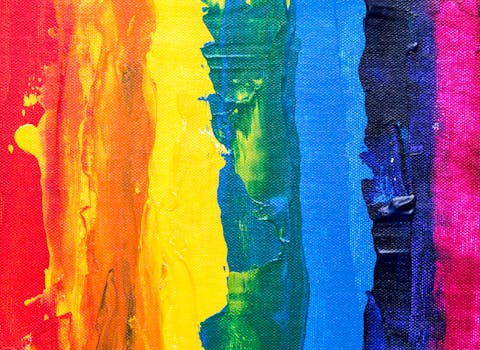
Most people dream in colour — but don’t always notice it. It’s usually only when a colour is especially intense, unusual or recurring that it forces its way into awareness: a bright red door, a sky-blue ocean, a white figure in the dark. When a colour lodges itself in memory, it’s rarely by chance.
Colours in dreams operate in a symbolic language that’s both culturally shaped and deeply human. Some colour associations are close to universal; others vary between cultures. Here’s a walk-through of the main ones.
Red
Red is the most intense and powerful colour dreams have to offer — and the most ambiguous. It represents life force, passion, love and sexual energy on one hand, and aggression, danger and anger on the other. Context is everything.
A red flower or a red dress speaks to love and the joy of living. A red room or red light speaks to danger, aggression, or something intense and out of control. Red blood is life and loss in one image.
Ask yourself: did the red feel threatening or inviting? That tells you a lot.
Blue
Blue is calm, depth, and the transcendent. It’s the colour of sky and sea, and in dreams it’s tied to peace, communication and spiritual openness. Light blue is gentle and comforting. Dark blue is deep and carries some weight.
Dreaming in shades of blue often reflects a period of inner calm and reflection. A particularly intense blue can represent spiritual experience or a strong connection to something larger than yourself.
Green
Green is growth, the colour of nature, and everything that lives and renews itself. In dreams, green is generally positive: something is growing, something is fresh and alive, something is in its natural bloom. A deep green forest reflects something rich and wild. A pale green shoot reflects a new beginning.
Occasionally green carries jealousy (the “green-eyed monster”) or something toxic and negative. Context decides.
Yellow
Yellow is the colour of intellect and the sun — light, warmth, thinking and energy. A clear, bright yellow dream is rarely negative: it’s clarity, joy, intellectual activity. But yellow can also turn intense and jittery — a yellow that makes you uneasy often reflects intellectual anxiety or an overstimulated mind.
White
White is the colour of purity in dreams, and the colour of transition. In Western tradition, white is tied to purity, innocence and calm. But white is also the colour of borders — a white figure isn’t necessarily safe, and white light often represents the passage between states.
Dreaming of a white room or a white landscape can mean emptiness and possibility — a blank canvas where something new can begin.
Black
Black is the colour of the unknown and the unconscious — and in dreams it’s more nuanced than we tend to assume. Black isn’t only threatening. It’s also the private, the hidden, and what hasn’t yet been acknowledged.
A black figure in a dream is typically a Shadow figure — a part of the self one doesn’t recognise as one’s own. But a black cat isn’t necessarily evil; a black room isn’t necessarily dangerous. Black is the unacknowledged — and the unacknowledged is only frightening until it’s met.
Grey
Grey is the colour of neutrality and emptiness in dreams. Grey dreams often reflect periods of numbness, boredom or emotional distance. Something is neither good nor bad — it’s simply flat. Grey dreams are rarely dramatic, but they can carry a message that something needs more colour and life.
Orange
Orange is the colour of creativity, enthusiasm and warmth — somewhere between red’s intensity and yellow’s clarity of thought. Orange in dreams often reflects a creative period, enthusiasm for something new, or a warm, lively energy.
Purple and violet
Purple is the colour of transformation and the spiritual — in many cultures and traditions, purple is tied to wisdom, magic and what transcends the ordinary. Dreaming in purple tones often reflects a period of spiritual searching, deep introspection, or a psychological transformation underway.
Pink
Pink is the colour of tenderness, care and childlike innocence. Pink in a dream can represent something vulnerable and loving — a side of yourself that’s soft and open, or a need for warmth and care.
Colour and culture
It’s worth remembering that colour symbolism varies. In Western tradition, white as a colour of mourning isn’t common — but in many Asian cultures, white is the colour of funerals. In Islamic tradition, green is the colour of paradise. Red in Chinese culture means joy and good fortune, not danger.
What do the colours mean to you, in your own cultural background and your personal life story?
Tracking colour in your own dream journal
When you note your dreams in a dream journal, always record colours that felt especially intense or unusual. Over time, you’ll notice patterns: maybe red always shows up during stressful periods, or blue during calmer ones. Your personal colour associations matter just as much as the cultural ones.
Do you dream in colour?
Many people wonder whether they actually dream in colour or in black and white. Research shows that the vast majority of people do dream in colour, but don’t always notice it — because the colours in a dream aren’t always as intense or memorable as other elements of the dream. Older studies (from before colour television was widespread) found that a larger share of people reported black-and-white dreams, suggesting that exposure to colourful visual media genuinely shapes the colour palette of our dreams.
If you rarely notice colour in your dreams, it can help to actively ask yourself the question right after waking: what colour was that thing I saw? Many discover that the colour information was there all along, but simply wasn’t prioritised in memory.
Unusually vivid or unnatural colours
Sometimes the colour in a dream isn’t just present — it’s overwhelming, unnaturally saturated, or otherworldly. A blazing green sky, a deep blue-violet light, a red more red than any red in reality. These dreams are rarely random.
Unusually intense colours in dreams often signal that something is especially charged — emotionally, psychologically or spiritually. It’s worth paying particular attention to dreams where a colour feels stronger than what’s physically possible. What was happening around that colour? What did it feel like?
Colours in recurring dreams
If you have recurring dreams, notice whether the colours stay the same from one occurrence to the next. A room that’s always green, an ocean that’s always dark blue, a figure that’s always white — these recurring colour symbols are personally consistent and point to a fixed theme in the subconscious.
Over time, in your dream journal, you’ll be able to see the pattern: which colours dominate during good periods, which during hard ones, which during transitions.
The palette of your inner life
Colours in dreams form their own layer of symbolic language that enriches a dream’s meaning:
- Red: life force, passion, aggression — context decides
- Blue: calm, depth, communication and the spiritual
- Green: growth, nature, renewal
- Yellow: intellect, clarity, energy
- White: purity, transition, possibility
- Black: the unconscious, the hidden, the unacknowledged
- Grey: numbness, neutrality, emptiness
- Orange: creativity, enthusiasm, warmth
- Purple: transformation, spiritual searching, wisdom
- Pink: tenderness, vulnerability, care
Unnaturally intense or saturated colours are always worth paying special attention to — they’re often the most meaningful colour appearances a dream can offer.
Sources and further reading
- Calvin Hall & Robert Van de Castle, The Content Analysis of Dreams (1966) — content analysis of large dream collections, including how often colours are recalled at all.
- Carl Gustav Jung, Man and His Symbols (1964) — the place of colour in the symbolic language, and why the same colour can mean opposite things.
- G. William Domhoff, The Scientific Study of Dreams (2003) — why personal associations carry more weight than universal colour keys.